


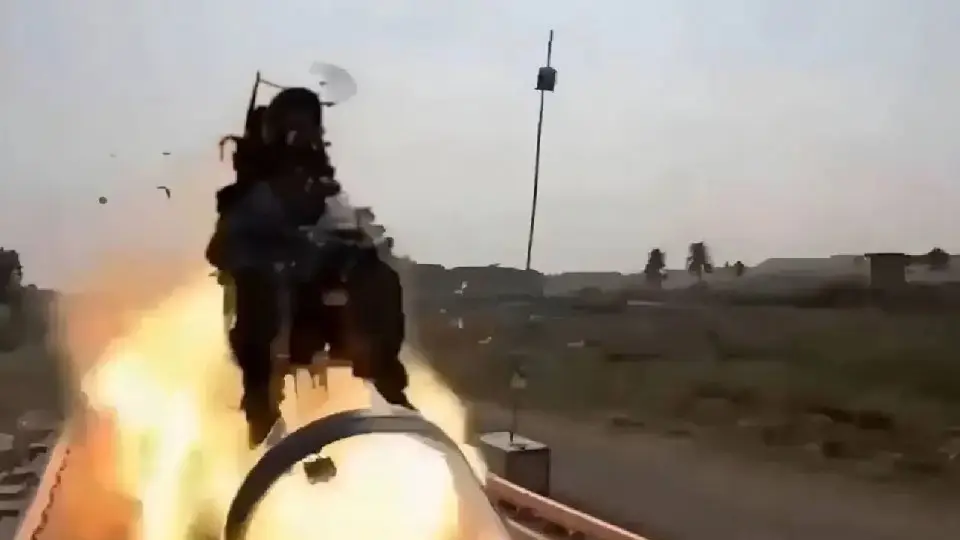
DRDO, Escape System ( Credit: OpenAI)
New Delhi: India surprised global defence experts by successfully completing a high-speed escape system test designed to save pilots during life-threatening moments, using a Tejas cockpit mounted on a rocket sled to reach 800 kilometres per hour, activating automatic glass break, seat ejection and safe dummy landing, all performed under realistic pressure, proving India’s growing engineering strength and precision in dangerous flight-like conditions.
The escape system protects pilots during jet malfunction by shattering cockpit glass safely, lifting the seat straight upward without shaking, locking the pilot firmly with belts, separating the chair at the correct height and opening the parachute at a fixed level, allowing slow landing even at extreme speed, with each step completing within seconds, proving that India’s safety process works perfectly under strong wind resistance.
This test was difficult because high temperatures, noise, turbulence and intense air pressure had to be controlled at once, requiring multiple rocket motors to generate real-flight force, while sensors measured every movement of the seat, glass angle, air pressure and parachute timing, ensuring nothing went wrong, and every reading stayed within global safety limits, showing that India can now match major aerospace nations.
Global powers like the US, France and Russia praised India for mastering a complex technology that many countries still depend on foreign suppliers for, proving that India no longer needs outside help for pilot ejection systems, and showing that India now owns world-class testing facilities, reducing foreign cost and increasing global trust, marking a major step toward becoming a respected defence technology leader.
Indian Air Force pilots will now benefit from stronger protection during training and combat because the system reacts instantly to danger, giving safety equal to top nations, and this technology will now be added to AMCA, TEDBF and LCA Mark-2 fighters, making them safer, lighter and more reliable, improving confidence among pilots and raising India’s air defence capability to a new level.
The success supports India’s self-reliant defence plan by removing the need for foreign test centres or imported ejection seats, with DRDO, HAL and ADA working together for months to refine the design, reducing costs and building local industry, while motivating young engineers to join aerospace, helping India become a future exporter of safety systems and strengthening its long-term defence goals.
This achievement shows India’s confidence in building and testing advanced aviation systems inside the country, improving global ranking in defence technology, boosting pilot trust, reducing risk during missions, supporting local manufacturing and proving India’s ability to compete with major powers, marking the beginning of a new era where India develops world-class aircraft safety systems independently and strongly.












Copyright © 2025 Top Indian News


